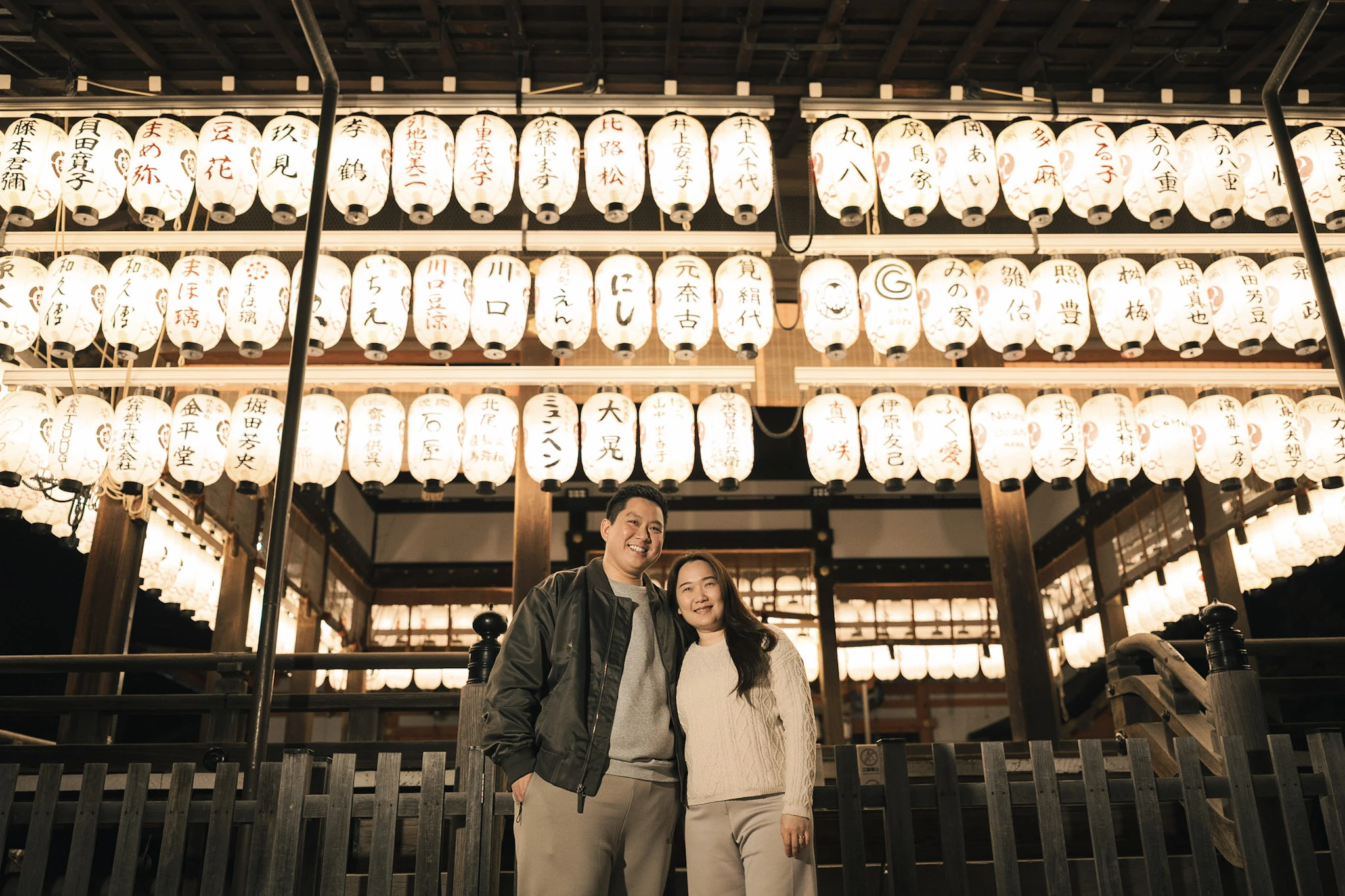
Kyoto night photography can feel intimate and atmospheric: warm light on wooden buildings, a quiet pause beside a street lamp, or a couple walking through the last light of the evening.
A successful night photoshoot depends on more than finding a beautiful street. We need usable light, a manageable route and places where photography is permitted.
For couples, honeymoon travelers or solo portraits, here is how I would plan photographs from sunset into the evening in Kyoto.
Blue Hour Is Often the Best Place to Begin
I usually recommend thinking about the transition into night rather than choosing a fixed clock time.
Blue hour is the short twilight period when the sky can remain blue while lanterns and other artificial lights begin to shape the scene. It can give portraits more separation and detail than a completely dark background.
Starting before sunset also leaves room for a few softer daylight photographs. Later, the gallery can move toward closer portraits and more dramatic backgrounds.
The timing changes by season and weather. Kyoto’s official morning and night guide also notes the seasonal difference in daylight, so we plan around your date rather than promise the same start time all year.
Gion: Traditional Atmosphere in Permitted Areas
Gion’s wooden façades and street details can suit a refined, cinematic portrait style.
The important part is selecting a permitted route. Kyoto’s official responsible travel guidance explains that photography is prohibited in many Gion areas and asks visitors to respect local people and everyday life.
We follow posted signs, avoid private lanes, keep entrances clear and do not photograph geiko or maiko without permission. An evening session does not make a restricted location available.
For portraits, I would look for a small number of useful backgrounds and good light rather than stop at every famous corner. Busy public streets can still be busy after dark.
Higashiyama: A Route That Changes With the Light
Higashiyama offers traditional streets, architectural details and wider scenes that feel connected to Kyoto.
For an evening session, I would use the remaining daylight for wider compositions, then move toward permitted spots where the light works for closer portraits.
A street that looks beautiful in daytime can become too dark for the photographs you want. We adjust the route around actual conditions instead of assuming every landmark will be illuminated.
Temple interiors, gardens and special evening openings have their own access and photography rules. Admission to a night event is not automatically permission for a paid portrait session, and seasonal illuminations should be checked for your date.
For daytime alternatives and a broader comparison, see my Kyoto photoshoot location guide.
Pontocho and the Kamo River Area
Around central Kyoto, Pontocho’s restaurant streets and the Kamo River area offer another possible evening setting.
I would consider brighter, permitted public viewpoints for city context and walking portraits around dusk. We avoid dark lower riverbanks after nightfall and choose a route with comfortable footing and sufficient light.
Narrow restaurant streets need particular care: no blocking doorways, stopping service or using a business interior without permission.
Kyoto’s official photography permission FAQ for Gion and Pontocho advises consulting the individual facility. Any venue included in a commercial session should be checked before it becomes part of the plan.
Is Philosopher’s Path a Good Night Location?
Philosopher’s Path is a lovely choice for canal-side scenery and seasonal greenery, but I would usually prioritize daylight or the approach to dusk for portraits there.
After dark, greenery and the canal may lose detail, and useful light can be limited. It is not a route where I would promise a lantern-filled night gallery without checking the exact conditions first.
If that softer setting appeals to you, we can discuss a daytime session or an earlier start. The Philosopher’s Path section of my Kyoto guide explains the atmosphere and planning considerations.
What About Fushimi Inari After Dark?
The time of day does not remove the shrine’s commercial photography restrictions.
Fushimi Inari Taisha’s official visitor rules prohibit commercial photography. I do not treat it as a standard paid client photoshoot location, including at night. Any proposed professional shoot would need explicit advance authorization from the shrine; permission should not be assumed.
We choose suitable permitted alternatives for your session.
What to Wear and How to Prepare
Simple outfits and a limited color palette can work well with wooden architecture and warm street light.
- Choose clothing you can move and walk in comfortably.
- Bring a light layer for the evening.
- Avoid large logos or several competing patterns.
- If you are renting a kimono, check the return deadline before booking the session.
- Share your dinner or transport plans so the route fits your evening.
A shorter, focused route often feels more relaxed than trying to combine several distant areas. Rain and crowds may also change the best meeting point or the sequence of photographs.
Planning a Kyoto Night Photoshoot
Tell me your dates, who will be joining and whether you prefer soft blue-hour portraits or a darker, more cinematic mood.
I can help choose the route and timing around the photographs you want, with the relevant access and photography rules checked in advance.
View Photography Packages
Explore the Portfolio
Check Availability