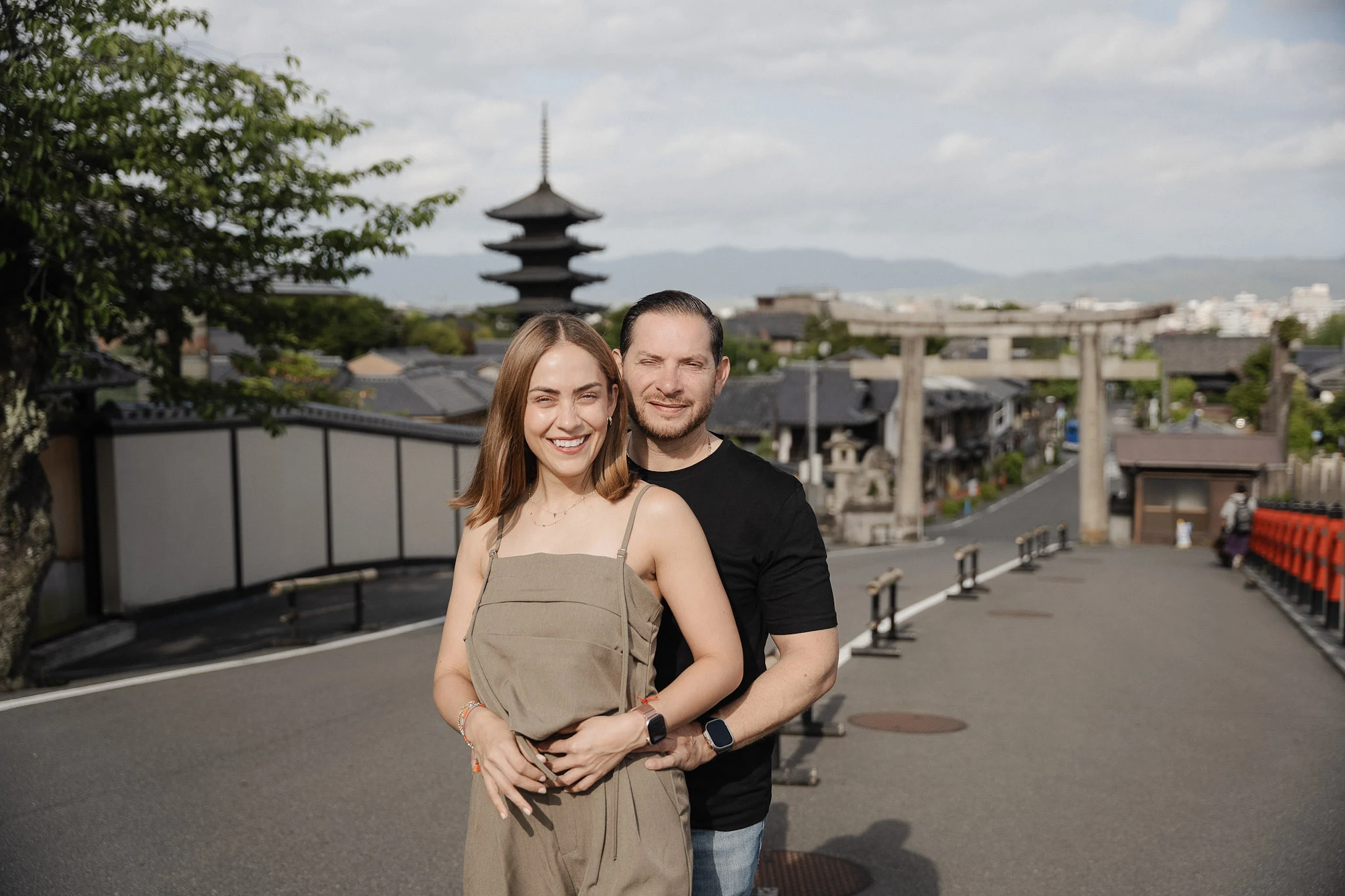
Kyoto has an enormous number of beautiful places, but choosing a location for professional photography is different from choosing a sightseeing destination.
A location may look spectacular in travel photos but be difficult for a portrait session because of crowds, narrow streets, restrictions or limited visual variety.
Alongside Higashiyama and Gion, this guide covers Philosopher’s Path, Nanzen-ji and Okazaki, and Arashiyama, plus the important photography restrictions at Fushimi Inari.
They create very different photographs.
Higashiyama: My Choice for the Most Variety
For many travelers, Higashiyama gives the strongest overall Kyoto experience.
Within a relatively compact area, you can find traditional streets, wooden architecture, stone paths, temples, pagoda views and small details that immediately feel connected to Kyoto.
It is particularly good for:
- Couples
- Honeymoon sessions
- Solo portraits
- Family photography
- Lifestyle photography
The biggest advantage is variety.
Instead of spending the whole session around one landmark, we can create a visual sequence while walking through the neighborhood.
Kyoto’s official tourism organization also features an early-morning Higashiyama itinerary running from the Kiyomizu-dera area toward Yasaka Shrine and Gion, reflecting how naturally these areas connect on foot.
The itinerary is a walking guide, rather than permission for a professional shoot. We check each location’s rules, avoid tripods on the residential streets and keep the route clear for other people.
Gion: Elegant and Atmospheric
Gion can create a more refined and intimate Kyoto feeling.
Wooden façades, narrow streets and traditional architecture work very well with my natural and slightly cinematic photography style.
However, Gion is also a real neighborhood rather than a photography set.
Residents, businesses and private property must be respected.
Some areas can become busy, and photography should never block streets or interfere with residents.
Kyoto’s official visitor guidance asks visitors to respect the customs and everyday life of the Gion district. Photography is prohibited in many Gion areas, so a session must use permitted spots and follow posted signs. We do not enter private lanes or photograph geiko or maiko without permission.
For that reason, I prefer moving naturally through permitted areas rather than creating large or disruptive setups.
Higashiyama + Gion Together
For many sessions, this is the combination I recommend, using a route where photography is permitted.
Instead of choosing one single landmark, we can create a walking route.
This allows the photographs to evolve naturally:
traditional streets → architectural details → portraits → candid walking photographs → wider Kyoto scenes.
It also makes the gallery feel much more varied.
For a 90-minute or two-hour session, this style of route is particularly effective.
Philosopher’s Path: Natural Portraits Beside the Canal
Philosopher’s Path, or Tetsugaku-no-michi, is a lovely option when you want photographs with more greenery and a relaxed walking atmosphere.
The official Kyoto guide describes a canal-side route between Ginkaku-ji and Nyakuoji Bridge, known for its spring cherry blossoms.
For portraits, the canal, trees and changing backgrounds can create a softer feeling than the traditional streets of Gion.
It is especially worth considering for:
- Couples who enjoy natural walking photographs
- Solo travelers who prefer greenery to busy streets
- Spring portraits, depending on blossom conditions
- A relaxed gallery with small seasonal details
During cherry blossom season, the path can be busy. An early start may help, but an empty background is never guaranteed.
We keep the walking route clear and respect nearby homes and businesses. For a paid session, the proposed route and any permission requirements need to be checked in advance; public access alone does not confirm that a professional setup is allowed.
Nanzen-ji and Okazaki: Architecture, Texture and Greenery
Nanzen-ji and the surrounding Okazaki area offer a different side of eastern Kyoto.
The official Nanzen-ji guide highlights the temple’s large gate, gardens and historic aqueduct. These settings offer strong lines, stone and brick textures, and trees that can suit a more architectural portrait style.
I would consider this area for couples or solo travelers who want a mixture of portraits and wider environmental photographs.
A route here can also complement Philosopher’s Path, depending on the session length, walking pace and the areas where photography is permitted.
Temple grounds, interiors, gardens and neighboring venues can have different access and photography rules. Before including them in a paid session, we confirm permitted areas, opening times, admission requirements and whether advance authorization is needed. A sightseeing ticket should not be treated as permission for a commercial shoot.
For an overview of the neighborhood, see Kyoto’s Philosopher’s Path and Okazaki area guide.
Arashiyama: Bamboo, Riverside Views and a Scenic Kyoto Feeling
Arashiyama is worth considering if you want a landscape-led gallery with bamboo, riverside scenery and broader views.
Kyoto’s official Arashiyama guide highlights the Bamboo Forest and Togetsukyo Bridge, while also noting how crowded the best-known spots can become.
The bamboo creates tall, graphic backgrounds. Riverside views offer a more open feeling and room for wider compositions.
For this style, I would plan the session around one manageable route and allow time to move between scenes. Early morning may make the popular paths easier to work with, but we still need to adapt to other visitors.
We stay on permitted paths, keep entrances and walkways clear, and never damage or step into the bamboo. Any temple or garden added to the route needs its own photography and access check.
Arashiyama is a separate western Kyoto area. For a shorter session, I would choose either Arashiyama or an eastern Kyoto route rather than spend much of the photography time traveling between them.
What About Fushimi Inari?
Fushimi Inari is one of Kyoto’s most recognizable destinations because of its long paths of vermilion torii gates.
For normal sightseeing it is absolutely worth visiting.
For paid professional photography, however, there is an important distinction.
Fushimi Inari Taisha’s official visitor rules prohibit commercial photography and photography in prohibited areas. They also specifically prohibit blocking narrow paths while taking photos or videos.
Because of this, I do not treat Fushimi Inari as a standard location for commercial client photoshoots. We would only consider a professional session if the shrine explicitly authorizes the proposed shoot in advance; do not assume permission is available.
This is one reason I frequently recommend permitted spots in Higashiyama and Gion instead.
A beautiful location is only a good photography location if we can use it respectfully and legally.
What Time Should You Shoot in Kyoto?
For the most popular areas, early morning has a major advantage.
Kyoto’s traditional streets can become extremely busy during the day.
Morning gives us:
- Fewer people
- Cleaner compositions
- Softer atmosphere
- More freedom to move
- A quieter experience
If morning is impossible, late afternoon and evening can also produce beautiful photographs.
In that case I normally design the route differently and use the crowds, lanterns and streets as part of the atmosphere rather than trying to make Kyoto look completely empty.
What About Night Photography?
Kyoto at night has a completely different character.
Lanterns and traditional buildings can create a moody, cinematic atmosphere.
For couples, this can work particularly well.
Instead of bright tourist photography, the images can feel closer to a film still or editorial portrait.
If that is the style you want, scheduling a session around sunset and continuing into blue hour can be a good choice, subject to the chosen locations’ access and photography rules.
Which Kyoto Location Should You Choose?
Choose Higashiyama if you want maximum visual variety, using permitted streets and viewpoints.
Choose permitted areas of Gion if you want traditional streets and a more elegant atmosphere.
Choose Higashiyama + Gion if you want a complete storytelling session along an approved route.
Choose Philosopher’s Path if you want canal-side walking portraits, greenery and seasonal details.
Consider Nanzen-ji and Okazaki if you prefer architectural textures and wider environmental portraits, once access and professional photography rules are confirmed.
Choose Arashiyama if you want bamboo and riverside scenery, with enough time to enjoy one western Kyoto route.
For a short session, one well-planned area usually gives a more relaxed experience than trying to visit every landmark.
For Fushimi Inari, visit and enjoy the shrine as a traveler, but commercial photography restrictions need to be respected.
Planning a Kyoto Photoshoot?
Tell me the type of photographs you like, who will be joining the session and what time you are available.
I can recommend a route rather than simply giving you a meeting point.
View Kyoto Photography
View Photography Packages
Contact Engin