Kyoto is not simply a city of famous landmarks. It is a place of atmosphere, texture, silence, and detail. From historic streets to bamboo paths and temple grounds, each area offers a different mood. Because Kyoto’s major sights are spread across distinct districts, choosing the right locations in advance is an important part of creating a smooth and visually strong photoshoot. Kyoto’s official travel guide also recommends planning by area for a better experience.
For clients who want photographs that feel refined, natural, and timeless, Kyoto offers some of the most beautiful settings in Japan. The key is not just visiting popular spots, but choosing places that match the feeling you want your images to carry.
Gion: Traditional Streets and a Refined Atmosphere
Gion is one of Kyoto’s most iconic districts, known for its traditional atmosphere and long cultural history. Kyoto’s official tourism guide describes it as a historic entertainment district near Yasaka Shrine where geiko and maiko live. For photography, Gion is ideal for elegant portraits with depth, texture, and a distinctly Kyoto character.
The beauty of Gion is in its restraint. The narrow lanes, wooden facades, and quiet details create images that feel sophisticated rather than busy. It is especially well suited for couples, solo portraits, and anyone looking for a more classic and polished visual tone.
Because Gion is also a living neighborhood, the experience should always be approached with care. Kyoto’s official visitor guidance explains that photography is prohibited in many Gion areas. We follow posted signs, avoid private lanes, keep entrances clear and do not photograph geiko or maiko without permission. A refined photoshoot here is never rushed or intrusive.
Ninenzaka: Stone Paths and Kyoto Architecture
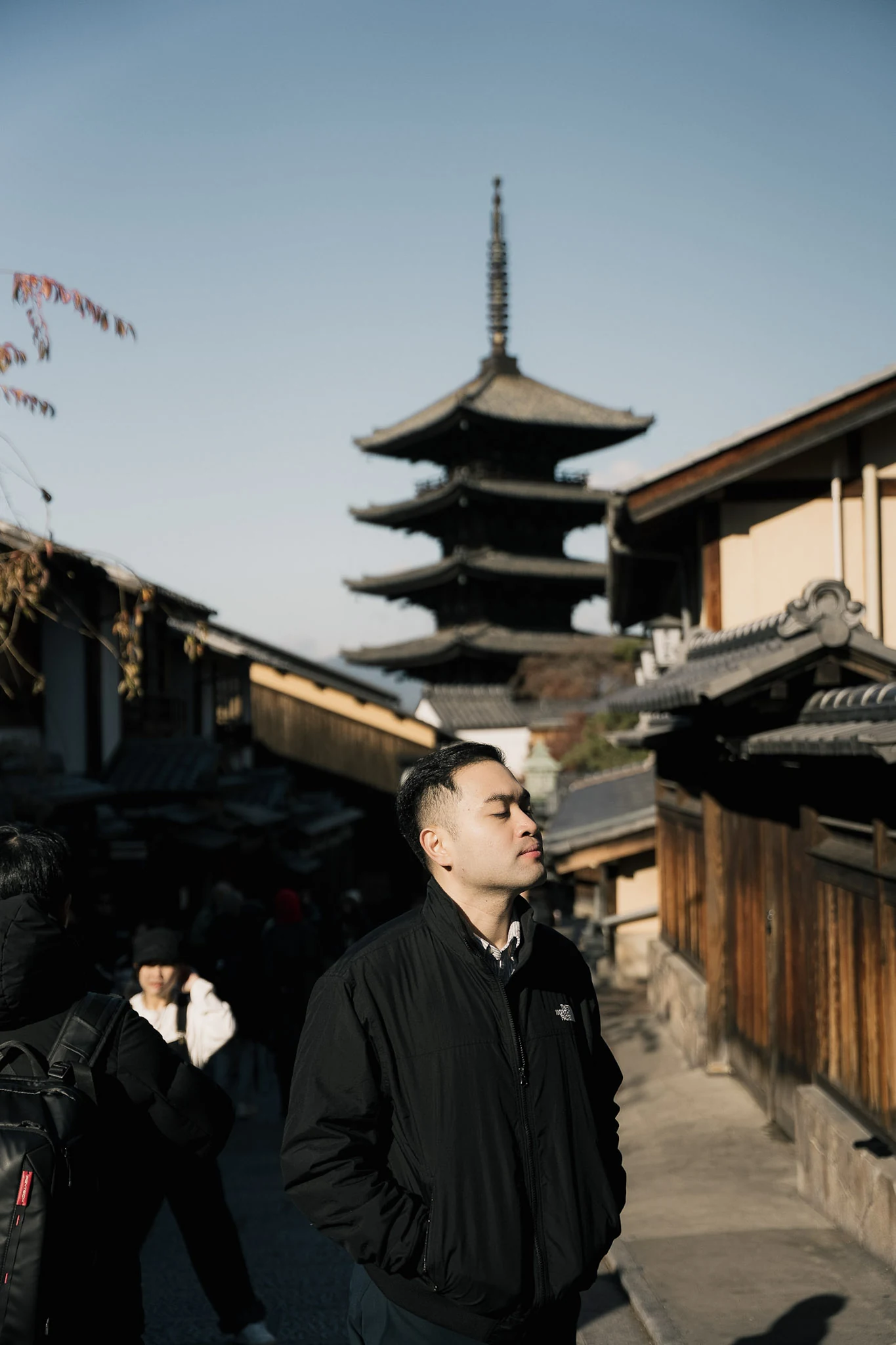
Ninenzaka is one of the most photogenic streets in Kyoto. Kyoto Travel describes Ninenzaka and Sannenzaka as historic roads lined with traditional townhouses, and from parts of the route you can see Yasaka Pagoda rising above the old streetscape.
This area is perfect for clients who want Kyoto to feel unmistakably present in every frame. The stone paths, preserved architecture, and layered perspective create images that feel romantic, graceful, and cinematic. It is one of the strongest choices for engagement sessions, anniversary shoots, and elegant travel portraits.
Arashiyama: Bamboo, Nature and Open Views
Arashiyama offers a different side of Kyoto. According to Kyoto’s official guide, the area is especially known for the Bamboo Forest and Togetsu-kyo Bridge. Compared with the denser historic streets of Higashiyama, Arashiyama feels more open, more natural, and more spacious.
For photography, this creates space for softer movement, more relaxed compositions, and a quieter emotional tone. It works beautifully for clients who want a calm and organic mood rather than a heavily urban or architectural one.
Because Arashiyama is one of Kyoto’s most visited areas, timing matters. Kyoto’s official visitor guidance also highlights both crowd awareness and the need to protect the bamboo environment. Early or carefully planned sessions make the visual experience much stronger here.
Fushimi Inari: Sightseeing and Photography Restrictions
Fushimi Inari Taisha is one of Kyoto’s most visually powerful locations. Kyoto Travel notes that it is the central shrine of around 40,000 Inari shrines across Japan. Its endless vermilion torii gates create a dramatic visual rhythm that is instantly recognizable.
The torii gates are striking to see, but this is not a standard location for paid client photoshoots. Fushimi Inari Taisha’s official visitor rules prohibit photography for commercial purposes and in restricted areas. A proposed professional shoot would need explicit advance authorization from the shrine; permission should not be assumed.
For a photography session, we choose suitable permitted alternatives. You can still enjoy Fushimi Inari as a sightseeing visit while respecting the shrine’s rules.
Kennin-ji: A Quiet and Composed Setting
Kennin-ji offers a calmer, more understated beauty. Kyoto Travel explains that the temple was founded by a monk who brought different kinds of tea from China, and today it remains one of the places where Kyoto feels especially quiet and composed.
Kennin-ji may suit clients who prefer subtle elegance, provided the proposed photography is permitted by the temple. The appeal here is not in visual excess, but in balance, space, and atmosphere. It pairs beautifully with Gion, allowing a session to move from textured city streets into a more serene and contemplative setting.
Choose the Atmosphere That Suits Your Session
The best location in Kyoto depends on the mood you want.
Choose permitted areas of Gion for timeless elegance.
Choose Ninenzaka for romantic Kyoto streets.
Choose Arashiyama for softness and nature.
Consider Kennin-ji for a calm, refined atmosphere, once access and photography permissions are confirmed.
Kyoto’s official guidance also reminds visitors to respect local neighborhoods, cultural spaces, and protected environments. The most beautiful images come from moving through these places with care.
Plan a Kyoto Photoshoot at a Comfortable Pace
A strong Kyoto photoshoot is not about rushing through famous spots. It is about choosing the right light, the right pace, and the right location for the story you want your images to tell.
If you are looking for natural, elegant, and cinematic portraits in Kyoto, these locations offer some of the most beautiful possibilities in the city. Each one carries a different feeling, and together they create a Kyoto experience that is both visually rich and deeply memorable.